
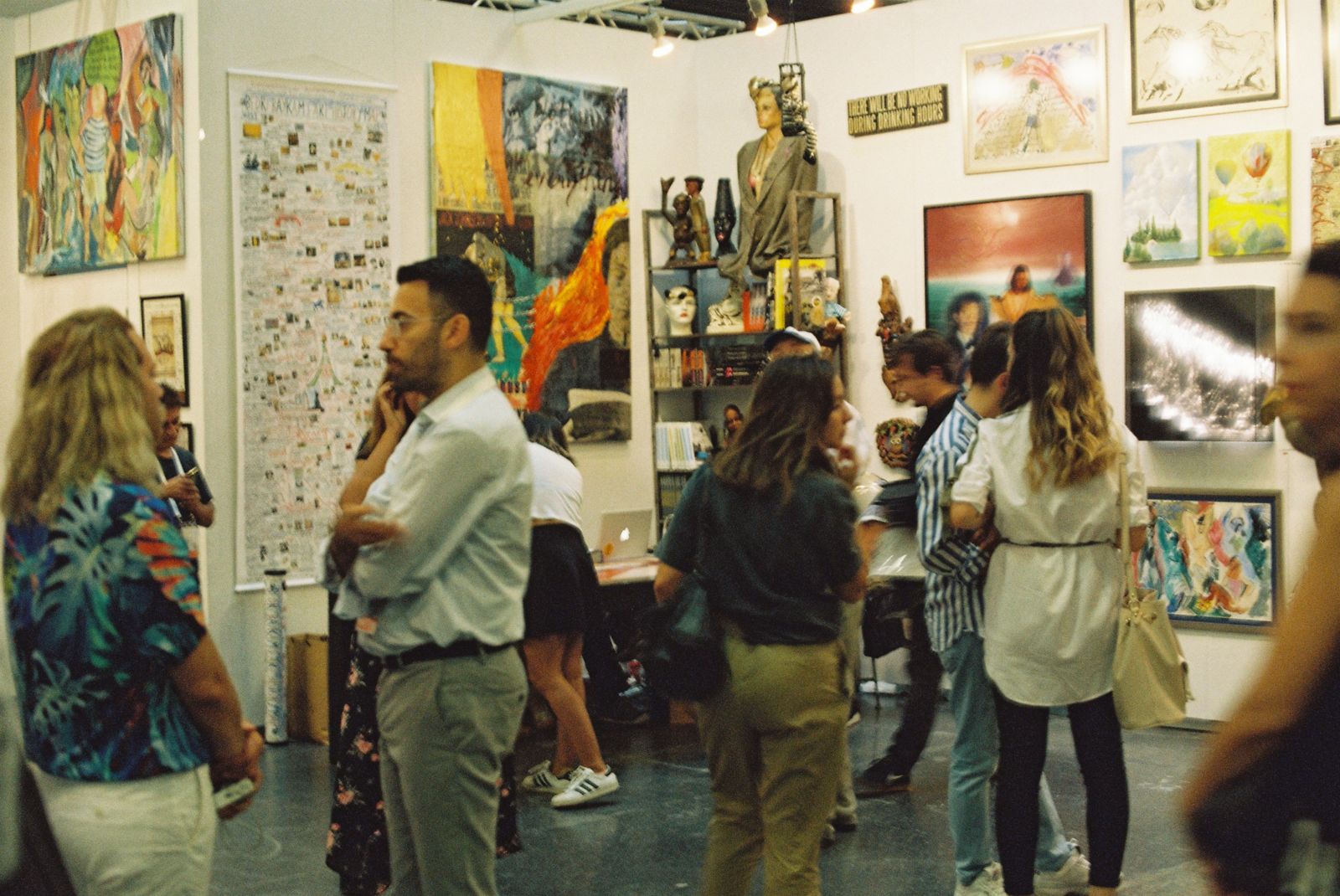
There is a particular kind of silence that falls over a room when a piece of art is truly, undeniably right. Not the silence of emptiness, but the silence of completeness — the held breath of a space that has finally found its voice. If you have ever experienced that moment, you already understand why serious collectors describe acquiring art not as a transaction, but as a recognition. Something in the work sees something in you, and the conversation begins.
Collecting Is a Practice, Not a Purchase
The most compelling private collections in the world share very little in common aesthetically. What they do share is intentionality. Whether an estate filled with post-war abstraction or a beachside home anchored by a single monumental ceramic, the collections that endure are those built around a point of view rather than a price point. Before you ever approach a gallery, a fair, or an artist's studio, spend time with a more fundamental question: what do you actually respond to? Not what you admire intellectually, not what photographs well, but what stops you in the middle of a room and holds you there.
Keeping a visual journal — screenshots, torn magazine pages, photographs taken on your phone at museums and hotel lobbies — is one of the most underrated tools a new collector possesses. Patterns emerge quickly. You may discover you are consistently drawn to texture over line, or to muted palettes over saturated ones, or to works that feel handmade and imperfect over the polished and precise. These preferences are your collecting compass.
Where to Look: Beyond the Obvious
Art fairs like Frieze, Art Basel, and TEFAF remain essential pilgrimage sites, but the most exciting discoveries are rarely made in the main aisles. Seasoned collectors know to spend time in the emerging and curated sections, where younger galleries present work that has not yet been absorbed into the institutional narrative. Prices are more accessible, and the intimacy of those conversations — with gallerists who are genuinely invested in their artists — is irreplaceable.
Outside of fairs, consider these often-overlooked discovery channels:
- Graduate degree shows at leading art schools — a remarkable hunting ground for original work at the very beginning of a career trajectory.
- Artist-run spaces and pop-up studios, particularly in cities undergoing cultural renewal, where the energy is unguarded and the access is direct.
- Regional auction houses, which frequently surface estate works by significant artists that have simply been out of circulation for decades.
- Public museum exhibition catalogues, which provide rigorous art-historical context and often spotlight undervalued artists deserving of wider attention.
- Instagram and Substack, where a new generation of artists publishes work directly and builds community outside traditional gatekeeping structures.
The Question of Provenance and Care
As your collection matures, the practical stewardship of works becomes as important as the acquisition itself. Provenance — the documented history of ownership — matters enormously for works of significant value, both for resale purposes and for the integrity of the historical record. Always request certificates of authenticity, condition reports, and any exhibition or publication history when acquiring secondary market works.
Equally important is the environment in which your collection lives. Direct sunlight, humidity fluctuations, and inadequate framing are responsible for more damage to private collections than any other single cause. UV-filtering glass, climate-conscious hanging locations, and annual condition checks by a conservator are not extravagances — they are the baseline care a serious collection deserves. When you invest in a home that is architecturally considered, with proper lighting systems and climate control, you are also investing in the longevity of everything you choose to live alongside.
Living With What You Love
There is a school of thought that art should be rotated, stored, and preserved for posterity. We respectfully disagree — or at least, we believe in balance. Art that is never seen is art that has been silenced. The works in your home should be in conversation with your daily life: the painting you pass every morning on the way to the kitchen, the sculpture that catches the late afternoon light in a way that still surprises you after three years, the print your children have grown up asking questions about.
This is where the philosophy of collecting and the philosophy of living beautifully converge. A home that has been gathered with care — where every object has been chosen, not merely acquired — has a different quality of presence. Guests feel it without being able to name it. It is the difference between a house that has been decorated and a home that has been inhabited with intention.
The most meaningful collections are also the most personal ones. They resist being read as status signals because they are too idiosyncratic, too specific, too clearly the product of a genuine interior life. That is the goal worth pursuing: not a collection that impresses, but one that reveals.
At House of I, we believe that the spaces we inhabit are themselves a form of self-expression — and that great art, like great architecture, has the rare power to make us more fully ourselves. Whether you are beginning your first collection or refining one that spans decades, the invitation is the same: look slowly, trust your instincts, and collect only what you cannot imagine living without.
The Virtu
Experience The Atlas
Go beyond the article — explore our curated heritage & culture collection inside The Virtu.
Explore in The Virtu