
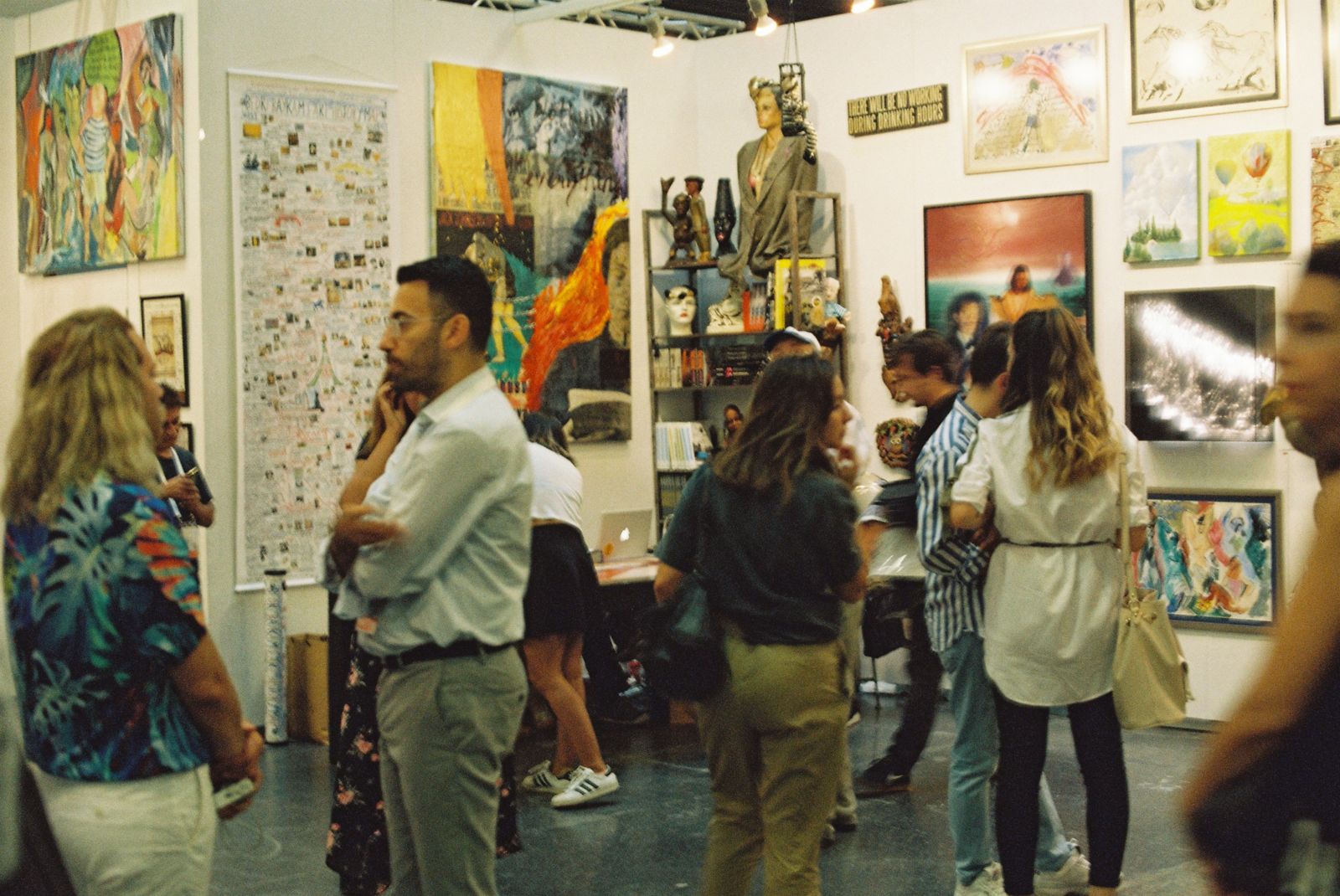
There is a particular kind of hush that falls over a room where great art lives. Not silence, exactly — more like a held breath, a sense that something in the atmosphere has been quietly, permanently altered. If you have ever stood in a collector's home and felt it, you already understand that art is not decoration. It is biography. It is the visible proof that someone has moved through the world with their eyes genuinely open.
Why Collecting Is a Practice, Not a Purchase
The most compelling private collections are never assembled in a single afternoon. They accumulate over decades of travel, conversation, and the particular serendipity that arrives when you have trained yourself to look. A work acquired at a small gallery in Lisbon sits beside a photograph picked up at an art fair in Miami, and somewhere between the two hangs a watercolour that a friend's friend offered quietly over dinner. The collection becomes a memoir written in pigment, bronze, and light.
This is the first and most important truth for anyone beginning — or deepening — a collecting life: buy what genuinely moves you, not what you have been told should move you. The market is a useful servant and a terrible master. Taste, when it is truly your own, has a coherence that no investment thesis can manufacture.
Where to Look Right Now
The art world's geography is more democratic than it has ever been, and that is genuinely exciting. Alongside the established blue-chip galleries of New York, London, and Hong Kong, a number of regions are producing work of startling originality and cultural depth.
- The Caribbean Basin — Artists across the islands are drawing on layered histories of colonialism, creolisation, and natural splendour to create work that is both politically alive and visually ravishing. Look for emerging voices in Trinidad, Jamaica, and the Dominican Republic, as well as the robust tradition of Haitian Vodou-inflected painting.
- West Africa and its diaspora — The global conversation around artists from Nigeria, Ghana, and Senegal has never been louder, and justifiably so. The work being shown from Lagos to London right now is redefining contemporary figuration.
- Southeast Asian printmaking and ceramics — Often overlooked by Western collectors, these traditions have an intimacy and technical sophistication that translate beautifully into residential settings.
- Latin American photography — A documentary tradition that ranges from the lyrical to the confrontational, and that prices itself, for now, far below its cultural weight.
Regional art fairs remain among the best entry points: Art Dubai, the São Paulo Art Biennial, and Art Basel's Miami edition all offer a density of discovery that is hard to replicate through any other channel.
Living With the Work: The Architecture of Looking
How art is placed is nearly as consequential as which art is chosen. A thoughtfully hung collection creates sequences — visual conversations that shift as you move through a home. Consider the ceiling height of a room before you commit a large-scale canvas to it; scale is the variable most often miscalculated by new collectors. Consider too the quality of light at different hours of the day. A work that glows in morning sun may entirely flatten under artificial evening light, and vice versa.
Some principles that experienced collectors swear by:
- Hang works lower than you instinctively want to. Eye level, seated, is the height at which most art was conceived to be encountered.
- Allow negative space. Overcrowded walls signal anxiety; breathing room signals confidence.
- Mix media and period deliberately. A nineteenth-century print beside a contemporary photograph creates a dialogue that neither could sustain alone.
- Let a single extraordinary object own a room. Not every wall needs to speak.
The Relationship Between Art and Architecture
The finest homes we encounter in our work at House of I share a quality that is difficult to name but instantly felt: the sense that the space and the objects within it have arrived at a mutual agreement. Architecture sets the stage, but art determines the emotional register of every room. A soaring entrance hall with a single monumental sculpture communicates something categorically different from the same hall crowded with salon-hung oils — and neither is wrong, only intentional in different ways.
When clients approach significant milestones — a new property, a life transition, a home that must now hold a larger version of themselves — we often suggest treating the acquisition of art as part of the process of inhabiting a space, not as an afterthought once the furniture has arrived. The two practices, collecting and nesting, are deeply related. Both are acts of self-definition.
Starting Points for the Emerging Collector
If you are earlier in your collecting life, the most practical advice is refreshingly simple: spend time in galleries without any intention to buy. Develop your eye the way you would develop any sensibility — through sustained, curious exposure. Attend open studio events. Read monographs. Follow curators and critics whose judgment you respect, even when you disagree with them. When something stops you, ask yourself why. The answer, over time, becomes the beginning of a collection.
Art changes a home from a residence into a world. It gives a space the quality that distinguished addresses have always possessed — not grandeur alone, but meaning. Whether you are standing before a single beloved print in a quietly lit hallway or navigating a collection built over a lifetime, the invitation is the same: to live more deliberately, more beautifully, and more fully awake to what surrounds you. That, at its heart, is what House of I has always believed a home should do.
The Virtu
Experience The Atlas
Go beyond the article — explore our curated heritage & culture collection inside The Virtu.
Explore in The Virtu