
There is a particular kind of stillness that happens when you live with a piece of art you truly love. Not the polite appreciation you feel in a gallery, standing at a respectful distance with a glass of wine in hand — but something quieter, more intimate. The way a canvas catches the early light differently each morning. The way a sculpture on a shelf becomes a fixed point in the drift of an ordinary day. Art, when it is chosen with intention, does not merely decorate a life. It deepens one.
The First Acquisition: More Ritual Than Transaction
Most serious collectors remember their first purchase with the same clarity they reserve for other defining moments — a move to a new city, the signing of a first home, a meal that recalibrated their understanding of what food could be. The piece is rarely the most expensive they will ever own. Often it is modest in scale, perhaps imperfect by the standards they will later develop. But it marks the moment when looking shifted into living, when art stopped being something witnessed and became something inhabited.
If you are at the beginning of this journey — or considering it — resist the pressure to begin with investment logic. The secondary market, auction estimates, and artist trajectories matter eventually. But the first question should always be simpler: does this make me feel more alive in its presence?
What the Curators Know That the Rest of Us Are Still Learning
Spend an afternoon with a serious curator or gallerist and you will quickly understand that collecting is, at its core, a practice of sustained attention. The collectors whose homes feel genuinely extraordinary — not merely expensive — are those who have developed what the French call le regard: a trained, personal, evolving eye.
That eye is built through deliberate exposure. Some practical ways to cultivate it:
- Visit the same exhibition twice — once on opening day with the crowd, and once quietly, alone, in the final week of its run.
- Follow living artists on their own terms: studio visits, open calls, residency exhibitions, and artist talks often reveal work that has not yet entered the commercial gallery circuit.
- Read broadly across art history, but anchor it in the present. Understanding where an artist sits within a lineage changes everything about how you receive their work.
- Keep a visual journal — not an Instagram feed, but something private. Document what moves you without the performance of an audience.
The reward for this kind of attention is not simply a better collection. It is a richer interior life, and ultimately, a home that tells a truer story about who you are.
Art Fairs, Galleries, and the Wisdom of Going Slowly
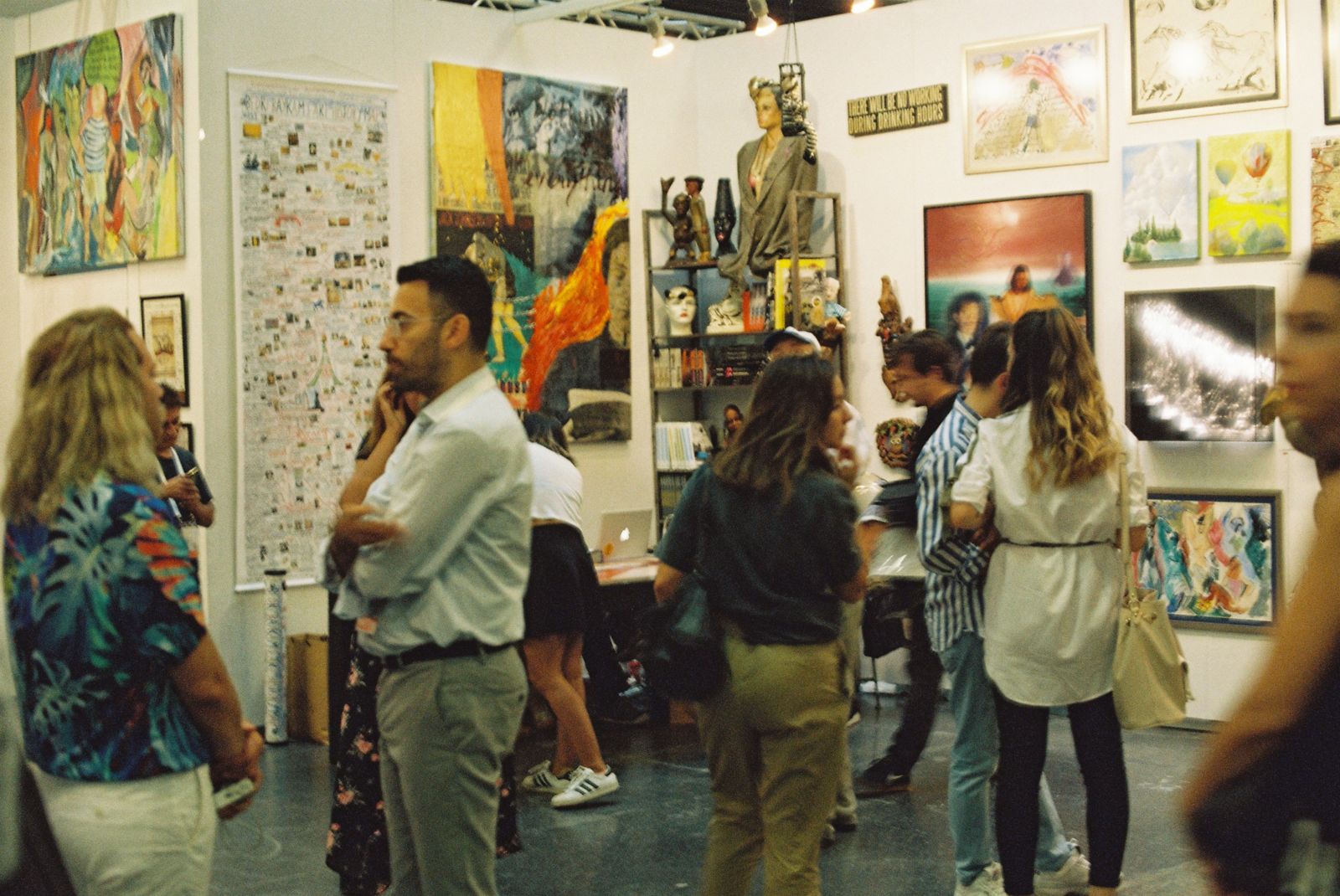
The international art fair calendar — Art Basel, Frieze, TEFAF, Art Dubai — can feel overwhelming in its scale and velocity. Thousands of works, hundreds of galleries, relentless social choreography. Many collectors return home having spent significant sums on pieces that feel, within weeks, slightly wrong for reasons they cannot articulate.
The antidote is not to avoid fairs — they remain genuinely thrilling concentrations of global creative output — but to arrive with a different posture. Walk the entire fair once before you speak to a single gallerist. Let the visual noise settle. Return the following day to the three or four works that stayed with you. Only then begin the conversation.
The best regional and boutique galleries, by contrast, offer something fairs cannot replicate: relationship. A gallerist who knows your home, your existing collection, your sensibility, and your life will consistently surface work that a fair algorithm never could. On island communities and in tight-knit coastal markets especially, these relationships are among the most quietly valuable a collector can cultivate.
Living With Art: The Architecture of Attention
The placement of art within a home is its own discipline, and it is one where many collectors — even experienced ones — underinvest their thought. A work hung too high, too isolated, or in competition with visual noise around it is a work that cannot breathe. And art that cannot breathe cannot do its work on you.
A few principles that endure across every style of interior:
- Hang art at eye level for a seated human being, not a standing one. Most rooms are lived in from chairs and sofas.
- Allow negative space. A single extraordinary work on an empty wall almost always outperforms a salon-style arrangement of lesser pieces.
- Consider light sources before you hang anything. Natural light is transformative; certain works — works on paper, photographs, delicate textiles — require protection from direct sun.
- Rotate. A collection that never changes becomes invisible. Bringing a stored work back into view can feel like a reunion with an old friend.
The Legacy Question
For those who have been collecting across decades, there comes a moment when the collection itself becomes a kind of autobiography — a record of attention, taste, risk, and love. The most thoughtful collectors begin to think not only about acquisition but about stewardship: what happens to these works, and what story do they tell about a life well-examined?
Bequests to institutions, artist estates, and private foundations are one path. But equally meaningful, for many, is the act of sharing — hosting works in the homes of the next generation, gifting a piece to mark a milestone, or simply opening a collection to those who might be changed by encountering it.
Art is not a luxury appended to a beautiful life. For those who learn to truly look, it is the very substance of one. It asks nothing more of you than your attention — and in return, it gives you back a world that is inexhaustibly interesting. Begin anywhere. Begin now. The looking, once started, never really stops.
The Virtu
Experience The Atlas
Go beyond the article — explore our curated heritage & culture collection inside The Virtu.
Explore in The Virtu