
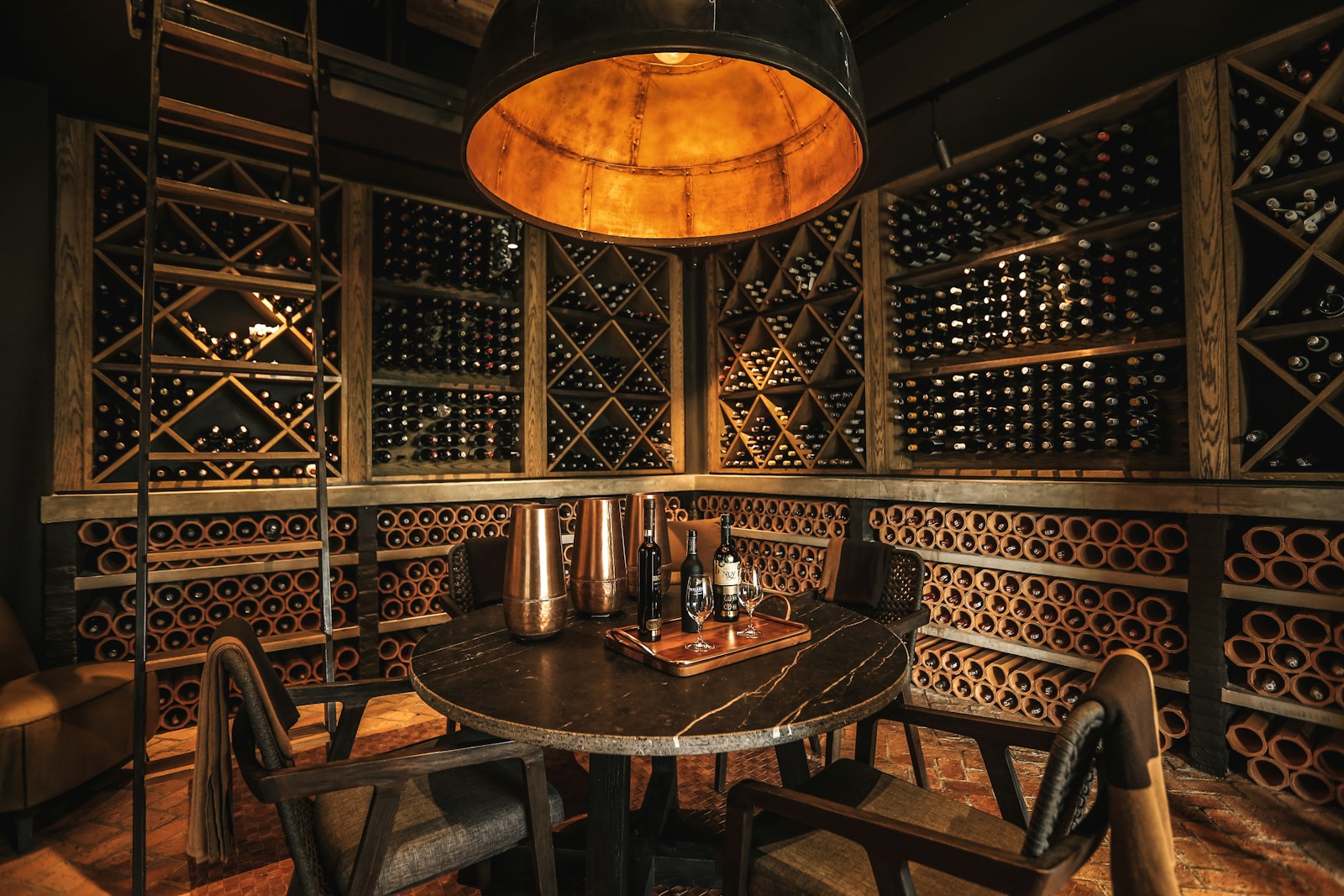
There is a particular kind of joy that arrives with the right bottle of wine — the one opened on a Tuesday evening for no reason at all, or the one saved for a moment that finally, beautifully, arrives. Wine, at its best, is not a status symbol or a score on a critic's chart. It is a companion to life's quieter ceremonies: the new home, the long dinner, the sunset that asks nothing of you except to stay a little longer. This is our editor's guide to drinking better — not more expensively, necessarily, but with greater curiosity, confidence, and care.
Start With Region, Not Grape
Most of us learned to navigate a wine list by varietal — Chardonnay, Cabernet, Pinot Noir — but the more rewarding approach is to follow the land. A Burgundy and a California Pinot Noir may share the same grape, yet they speak entirely different languages. The Burgundy whispers of chalk and cool forest floors; the Californian sings of ripe plum and warm afternoon light. Neither is wrong. But understanding that wine is first and foremost an expression of place — what the French call terroir — opens the door to an entirely richer conversation.
Begin exploring regions that excite you personally. If you are drawn to the Mediterranean — to light filtering through olive trees, to salt air and stone villages — start with the wines of Southern Italy: a Sicilian Nero d'Avola, a Campanian Fiano, a Primitivo from Puglia. If cooler climates call to you, look to Alsace, to the Mosel Valley, to New Zealand's Marlborough or Central Otago. Let your instincts lead.
The Bottles Worth Seeking Out Right Now
Our current editorial recommendations span styles, budgets, and occasions — because life rarely asks you to drink the same wine twice in the same mood.
- Champagne Laherte Frères 'Ultradition' NV — A grower Champagne of uncommon depth and honesty. Textured, mineral, and persistent, this is the kind of bottle that makes you reconsider everything you thought you knew about sparkling wine. Open it when the moment feels like it deserves to be marked.
- Domaine Weinbach Riesling 'Cuvée Théo', Alsace — Aromatic, precise, and hauntingly beautiful. This Riesling pairs as gracefully with a simple roast chicken as it does with a long, languorous afternoon on a terrace. The sort of wine that belongs in a well-considered cellar.
- Château Musar Rouge, Bekaa Valley, Lebanon — One of the world's most singular red wines, born from one of the world's most storied landscapes. A blend of Cabernet Sauvignon, Cinsault, and Carignan, aged with extraordinary patience. Rich, wild, and deeply moving — this is a wine for the curious and the adventurous.
- Sancerre Rouge, Henri Bourgeois — A reminder that Sancerre produces more than its famous whites. This Pinot Noir is ethereal and restrained, best enjoyed slightly cool with charcuterie, or on its own as the light fades.
- Masi Amarone della Valpolicella 'Costasera' — For the celebratory table, the long winter evening, or the new beginning that deserves something of gravity and grandeur. Concentrated, velvety, and profound. Give it time to breathe, and it will reward you handsomely.
Building a Small But Meaningful Cellar
You do not need a dedicated room or a temperature-controlled vault to keep a thoughtful selection of wine. What you need is a cool, dark, vibration-free corner — and a little forward planning. The philosophy of a personal cellar is simple: buy what you love, buy slightly more than you need for tonight, and allow yourself the pleasure of anticipation.
A sensible starting cellar might include a case of a reliable white for weeknight dinners, a half-case of something that rewards aging — a structured red, a late-harvest dessert wine — and a few bottles of good Champagne or quality sparkling wine for occasions that arrive unannounced. Beyond that, let the collection reflect your life: the regions you've visited, the vintages that carry personal meaning, the bottles given by people you love.
Pairing as a Philosophy, Not a Formula
The old rules — red with meat, white with fish — are guidelines, not commandments. The more useful question is one of weight and intensity: does the wine complement or compete with what's on the plate? A full-bodied Syrah overwhelms delicate sole; a crisp Vermentino gets lost beside a slow-braised lamb shoulder. Beyond that, trust your palate entirely.
Some of the most memorable pairings are unexpected ones. A great Sauternes alongside aged Comté cheese. A briny Manzanilla Sherry with freshly shucked oysters. A lightly chilled Beaujolais with a summer charcuterie board. Experimentation, here, is always the most elegant approach.
The Ritual of Opening
Perhaps what we love most about wine is not the wine itself, but what surrounds it — the deliberate pause it demands, the conversation it invites, the way it slows an evening down to something worth remembering. Whether you are marking a move to a new home, gathering family around a table, or simply choosing to make a Wednesday feel like something, the act of opening a good bottle is, in itself, a kind of grace.
At House of I, we believe that living beautifully is rarely about grand gestures. It is the accumulated quality of daily pleasures — the morning light in a well-chosen room, the garden that asks you outside, the bottle opened with care and shared with intention. Wine belongs in that same collection of quiet luxuries. Drink what moves you. Learn as you go. And never, ever save the good bottle for later.
The Virtu
Experience The Reserve
Go beyond the article — explore our curated fine wine collection inside The Virtu.
Explore in The Virtu