
There is something quietly extraordinary about a great bottle of wine — the way it anchors a moment, turns an ordinary Tuesday into something worth remembering, or transforms a new dining room into a home. At House of I, we believe the finest things in life are not simply owned; they are understood, curated, and savored. Wine, perhaps more than any other pleasure, rewards that kind of attention.
Start With the Region, Not the Label
The most liberating shift any wine enthusiast can make is learning to think in terroir rather than brands. A producer's name on a label is only half the story — the soil, the climate, the altitude, and the particular slope of a hillside are what give wine its soul. Once you understand why a Burgundian Pinot Noir tastes of earth and iron while a Central Otago version sings with bright cherry and dried thyme, the entire world of wine opens up in an entirely new register.
Begin with a region that genuinely intrigues you. If you are drawn to elegance and restraint, spend a season exploring the Côte de Nuits. If you crave generosity and warmth, let Ribera del Duero or Napa Valley's warmer appellations be your guide. Depth comes from focus, not breadth.
The Bottles Our Editors Are Pouring Now
Every season brings its own mood, and right now we find ourselves reaching for wines that carry both complexity and comfort — bottles that reward curiosity without demanding a course in oenology to enjoy them.
- Domaine Leflaive Mâcon-Verzé Blanc — An accessible entry point into the Leflaive legacy. All the mineral precision you would expect at a fraction of the Puligny price. Stunning with aged comté or a simple roast chicken.
- Bodegas Muga Reserva, Rioja — The benchmark of what Tempranillo can be when handled with patience. Notes of leather, cherry compote, and cedar make this an ideal companion to a long dinner with good conversation.
- Marques de Riscal Gran Reserva — A historic estate producing wine of remarkable consistency. This is the bottle to open when a milestone deserves to be marked properly.
- Gaja Barbaresco — For those who appreciate that great wine is never in a hurry. Nebbiolo demands time in the glass; give it room to breathe and it will give you an hour of quiet revelation.
- Cloudy Bay Pelorus NZ Sparkling — Effervescent and elegant, this New Zealand méthode traditionnelle speaks beautifully to waterfront evenings and celebratory toasts alike.
On Building a Cellar Worth Having
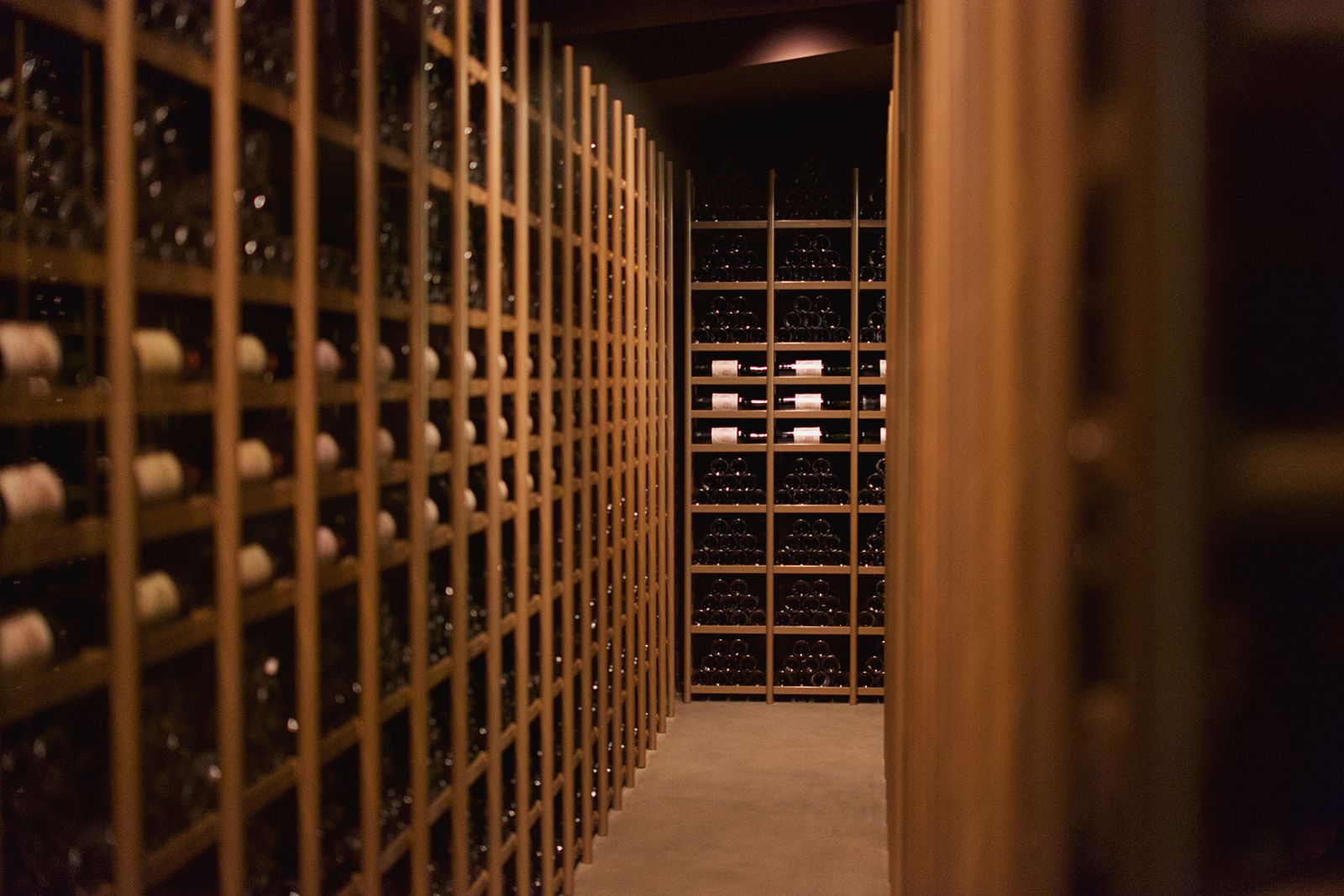
A wine collection is, in many ways, an act of optimism — you are investing in future pleasure, in evenings not yet lived, in guests not yet welcomed through your door. If you are fortunate enough to have the space, even a modest dedicated cellar transforms a home. Consistent temperature, limited vibration, and proper humidity are non-negotiable; everything else is personal.
Our guidance for building thoughtfully rather than impulsively: establish anchor cases in two or three regions you genuinely love, then allocate a portion of your collection to deliberate exploration. Twelve bottles of a trusted Bordeaux merchant's second wine, a case of aged Rioja, a mixed selection from a reputable Champagne house — these form the foundation. The discoveries you add around them are where the real joy lives.
And do not neglect the ritual of retrieval. A well-organized cellar, much like a well-considered home, should make you feel something the moment you walk into it.
The Pairing Principle Nobody Tells You
The most sophisticated pairing principle has nothing to do with red with meat or white with fish. It is this: match the weight and intensity of the wine to the weight and intensity of the moment. A delicate Sancerre belongs at a sun-drenched afternoon lunch; a brooding Amarone belongs by firelight in winter. A vintage Champagne belongs at the closing of a chapter — whether that is a decade, a deal, or a move to somewhere that finally feels like home.
When in doubt, always pour something that makes you happy. The most important thing any wine can do is belong to its moment.
A Word on Glassware and Ceremony
You do not need a different glass for every varietal. You do, however, need good glasses — and by good, we mean thin-rimmed, generously bowled, and clean enough that nothing interferes between the wine and your senses. Riedel's Veritas range and Zalto's universal glass are both exceptional. Beyond glassware, the ceremony matters: a proper decant for structured reds, a chill that does not over-suppress white aromatics, and a pour that gives the wine room to breathe in the bowl rather than filling it to the brim.
These details are not pretension. They are simply respect — for the winemaker's craft, for your guests, and for the occasion you have chosen to create.
Wine, at its finest, is one of the great connective threads of a beautiful life. It runs through our celebrations and our quieter evenings, through the homes we build and the tables we set. At House of I, we believe that knowing what you love — and why you love it — is one of the most elegant things a person can cultivate. Pour thoughtfully. Explore generously. And always, always leave room for a wine that surprises you.
The Virtu
Experience The Reserve
Go beyond the article — explore our curated fine wine collection inside The Virtu.
Explore in The Virtu